Call Us Today!
(631) 821-2244


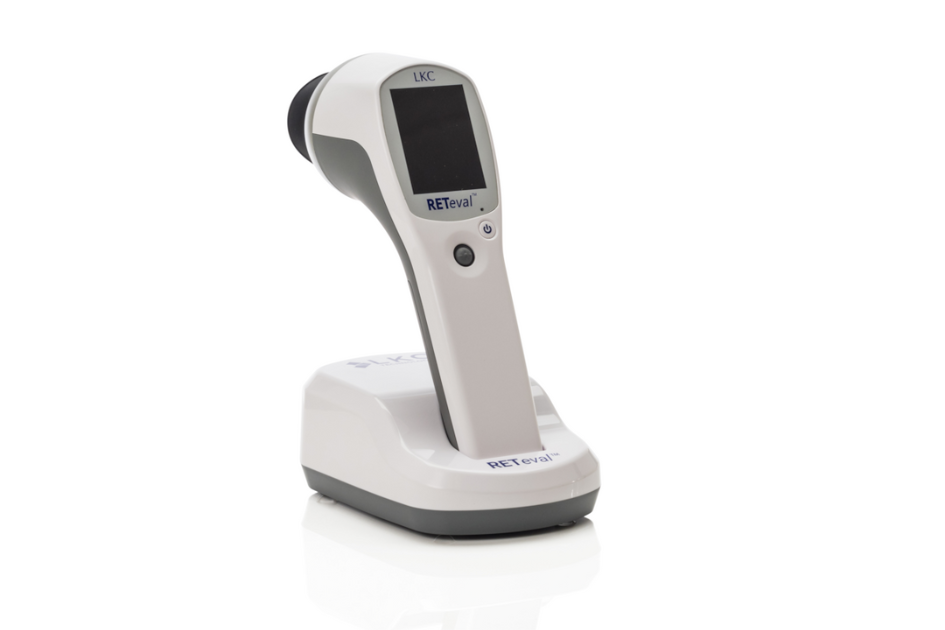
At Soundview Eye Center, we have introduced the RETeval® handheld ERG (electroretinogram) into our practice to help us better diagnose and manage disease for our diabetic patients. This advanced technology offers a functional test that gives us important information about the health of the retina — beyond what a standard structural exam can reveal. By combining a retinal cell stress measure with a pupil light response, the device allows us to rapidly and noninvasively assess patients at risk for diabetic retinopathy, as well as monitor retinal changes as the disease progresses.
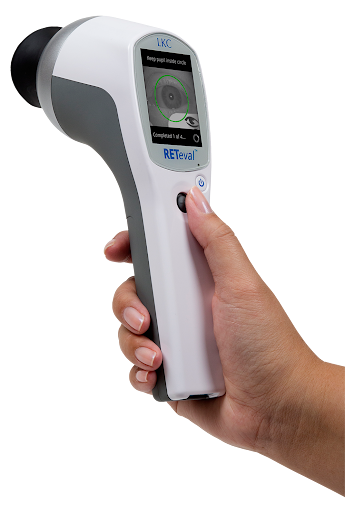
The RETeval® is a handheld visual electrophysiology device that allows your doctor to detect functional stress in the retina and optic nerve pathways using electroretinography (ERG) and visual evoked potential (VEP) assessments. Testing is comfortable, simple, and efficient, using adhesive electrodes to record the electrical impulses from the back of the eye when stimulated by a flash of light. These assessments help us detect and manage diseases such as diabetic retinopathy, glaucoma, and inherited and acquired retinal dystrophies.
Because so many serious eye conditions develop quietly, early functional information can be the difference between a treatable change and a permanent loss of vision. The RETeval® gives our doctors objective, measurable data — adding another layer of insight to the personalized, compassionate care our patients have come to expect.
Electroretinography is a test that provides comprehensive information about the function of the retina — the layer in the back of the eye that responds to light. When light is detected by the retina, it is converted into an electrical signal. The RETeval® device performs an ERG test that records the speed and strength of that electrical response when the eye is stimulated by a series of flashes of light. The signal is collected through Sensor Strips, small adhesive stickers placed gently under the eye, similar to what is used in many other routine medical tests.
The results tell us how well the cells of the retina are working, even before damage becomes visible on imaging or examination. This is especially valuable for patients with diabetes, where early functional changes can occur long before structural ones appear.

A VEP sensor is placed on the back of the head to detect the signal sent to your visual cortex when the retina is stimulated by a series of flashes of light. The results help your doctor identify whether there are any issues with how your eyes communicate with your brain — an important measure that complements traditional vision testing and supports the diagnosis of conditions affecting the optic pathway.
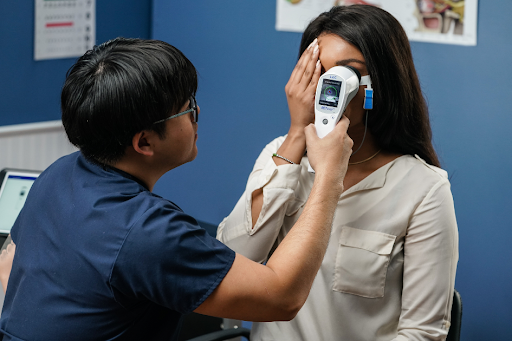
The test is comfortable, uses two adhesive skin electrodes placed under the lower eyelids, requires no patient cooperation beyond looking at a light, and can be performed in just a few minutes. Before testing, your technician will prepare the skin so that it is clean, dry, and free of any lotions or oils — this ensures the sensors can accurately detect the electrical signal generated by the retina. You may be asked to cover the eye that is not being tested while the RETeval® device is positioned in front of the other eye.
During the test, you will see a red fixation light along with a series of flashes of light. You will be asked to continue looking at the red light for the duration of the test and to follow the technician’s instructions. For VEP testing, additional sensors are placed on the forehead, the back of the head, and clipped to your earlobe to capture the brain’s response.
The entire process is painless, requires no dilation, and can typically be completed during your regular office visit.
The results are delivered as a DR (diabetic retinopathy) score, using an easy-to-interpret color-coded system that lets us know which patients are in the normal range and which are outside of normal limits. We use this information to guide follow-up appointments, counsel patients on lifestyle and disease management, and more closely monitor those at risk for progression.
Because RETeval® testing gives us objective, repeatable data, it allows us to track subtle changes over time. As we gather baseline information on our patients, we share that information and our treatment strategy with you. Together, we can do more to intervene earlier in the disease process and enhance our patients’ vision and quality of life.
Diabetic retinopathy is one of the leading causes of preventable vision loss in adults, and it often progresses without any noticeable symptoms in its earliest stages. Adding RETeval® testing to our diabetic eye care protocol means we can identify functional stress on the retina before vision is affected, giving patients more options and better outcomes.
At Soundview Eye Center, we are excited to offer this technology and believe it will have a positive impact on our patients. If you have diabetes — or have been told you are at risk — contact our office to learn more about RETeval® testing and schedule an appointment.