Call Us Today!
(631) 821-2244


Our Optical Department is designed to make the transition from exam to eyewear seamless. When a doctor prescribes glasses or contact lenses, having full-service optical capabilities on-site means prescriptions are interpreted and fulfilled by professionals who understand the clinical findings behind them. That continuity minimizes miscommunication, allows for immediate clarification when adjustments are needed, and keeps the focus on achieving the best possible visual outcome rather than just filling a script.
We manage the entire eyewear process under one roof, from verifying refractive needs to final quality checks before you leave the office. This approach helps ensure that lens powers, prism corrections, and any specialized prescriptions are implemented exactly as intended. For contact lens wearers, the same integration supports accurate fittings, follow-up care, and ongoing guidance that aligns with your eye health plan.
Because the clinical team and optical staff work closely together, unusual prescriptions or medically necessary lens designs are easier to coordinate. If a patient’s eye health requires specific lens considerations, such as anisometropia management or specialized prism, those needs are addressed in collaboration with the clinician to maintain visual comfort and ocular safety.
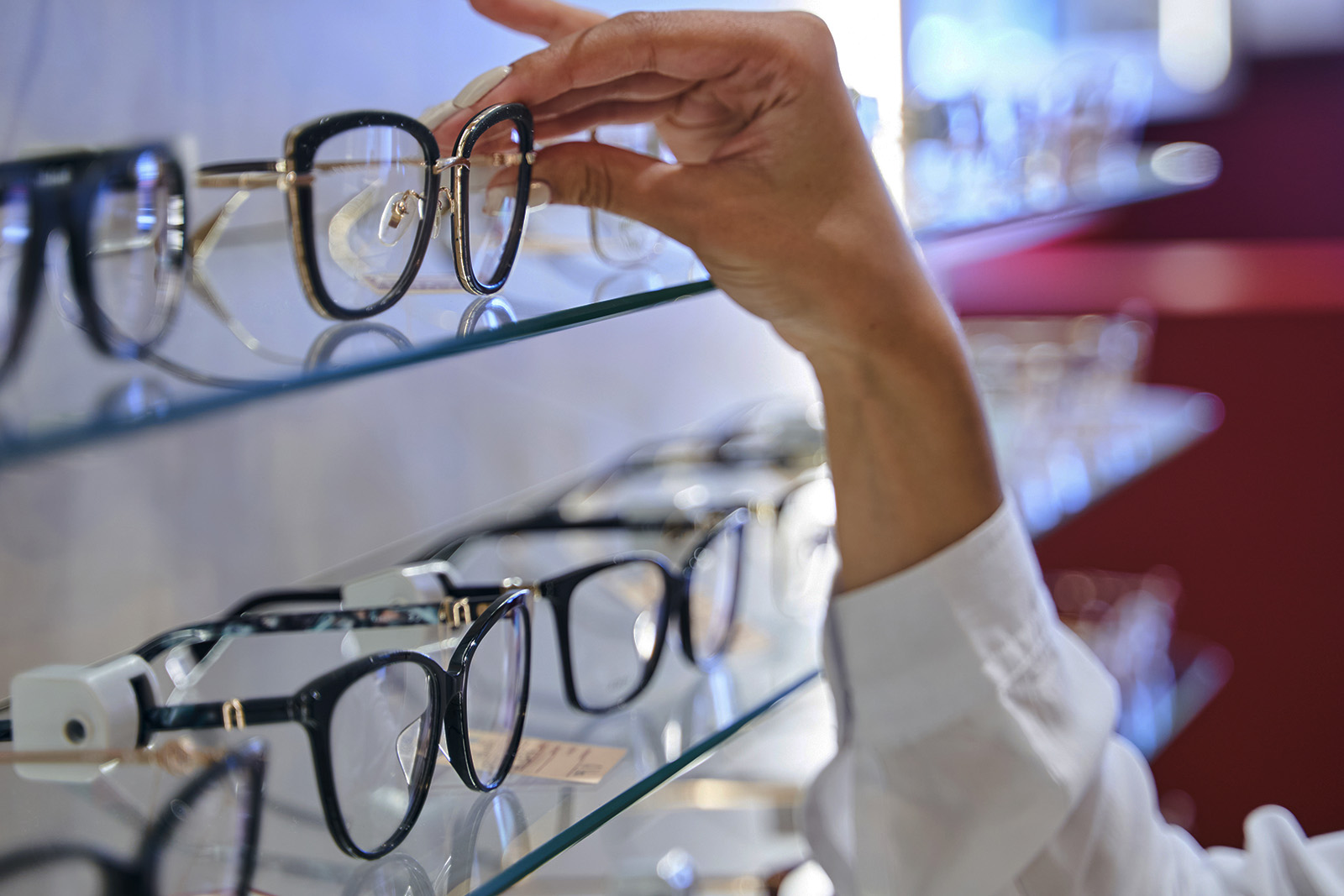
Choosing a frame is both practical and personal. Our optical team focuses on helping patients identify frames that complement facial features, meet lifestyle demands, and accommodate the chosen lens type. Whether you prefer a minimalist metal look, bold designer styles, durable sport frames, or lightweight acetate, the goal is to pair form and function so your eyewear performs as well as it looks.
We guide selections with an eye toward fit—ensuring proper bridge support, temple length, and lens height—so that prescribed optics sit correctly in front of your eyes. Proper frame fit affects visual performance as much as the lens; when frames are aligned to facial geometry, progressive lenses track better, and bifocal segments sit where they should for comfortable viewing at all distances.
Our inventory includes sunglasses and protective options suitable for outdoor activities and occupational needs. Sunglass lenses can be matched to your prescription and lifestyle preferences, providing glare reduction, UV protection, and visual clarity for driving, recreation, or everyday wear without sacrificing the cosmetic qualities you want.
Lens design has advanced rapidly, and our Optical Department stays current so patients can benefit from modern solutions. We offer a wide range of lens constructions—from single-vision and multifocal designs to digitally surfaced lenses that optimize optics across the entire surface. These technologies reduce peripheral distortion and improve clarity, particularly for progressive lens wearers who need a smooth transition between distances.
Surface treatments and coatings are chosen to enhance durability and performance. Anti-reflective coatings reduce glare and improve night-time comfort, while scratch-resistant and hydrophobic treatments help maintain clarity in everyday conditions. We also provide options for blue light mitigation and light-adaptive lenses when patients prefer added screen-time protection or automatic tinting outdoors.
Each lens recommendation is individualized based on a patient’s visual tasks—reading, computer work, driving—or any ocular conditions that influence optical performance. By aligning lens choice with real-world needs, we prioritize visual comfort and minimize adaptation time so patients can get back to their routines with confidence.
An accurate fit begins with detailed measurements. Our optical staff capture pupillary distance, segment height for multifocals, and other alignment metrics using precise instruments. These measurements are essential to translating the doctor’s prescription into a finished pair of glasses that deliver intended results. Small differences in alignment can change visual experience, so we make these steps a priority.
Fitting doesn’t end at dispense. We perform fine-tuning adjustments on-site to ensure frames rest comfortably and lenses sit correctly relative to the eyes. Regular follow-up visits for adjustments or minor repairs help maintain optical alignment over time, particularly for patients who wear glasses throughout the day or use them for specialized tasks.
For contact lens patients, follow-up fittings verify comfort, lens centration, and ocular health. Our team schedules appropriate aftercare to monitor how lenses perform on the eye, make necessary material changes, and address any comfort or vision concerns promptly. This structured aftercare supports long-term success with contact lens wear.
Our Optical Department functions as an extension of the clinical practice, with workflows that emphasize safety, communication, and quality control. Before any eyewear is finalized, prescriptions and lens choices are reviewed in the context of the comprehensive eye exam. This collaborative step reduces the risk of errors and helps ensure that visual correction supports each patient’s overall ocular health plan.
Technicians and opticians follow industry best practices for verification and inspection. Finished eyewear undergoes checks for accurate power, correct orientation of prism, proper lens centration, and secure frame fitting. When specialty lenses or medical considerations are involved, the optical team consults with the treating doctor to confirm the solution aligns with clinical recommendations.
We aim to provide an experience where patients feel informed and confident about their eyewear decisions. Staff explain technical details in plain language, offer demonstrations of new lens features, and help patients set realistic expectations for adaptation. That educational approach complements clinical care and fosters better long-term visual outcomes.
Wrapping up: Our Optical Department brings clinical insight, modern lens technology, and hands-on fitting expertise together to deliver reliable vision solutions. At Soundview Eye Center, the office and optical staff coordinate to make sure prescriptions are realized accurately and comfortably. If you’d like to learn more about our eyewear services or discuss options that suit your visual needs, please contact us for more information.
Our optical department provides comprehensive eyewear services that cover frame selection, lens fabrication, fittings and contact lens evaluations. We stock a range of designer and performance frames, specialty and safety options, and offer prescription sunglasses to match lifestyle needs. Technicians and opticians handle measurements, lens recommendations and final quality checks to ensure the prescribed correction is realized accurately.
Because the optical team works directly with clinicians, the transition from exam to finished eyewear is seamless and clinically informed. This coordination supports accurate prism implementation, anisometropia management and other medically necessary lens designs that require close clinical oversight. Patients benefit from clear explanations of lens features and hands-on fitting guidance before they leave the office at Soundview Eye Center, where we prioritize an integrated approach to deliver reliable visual outcomes.
Having an on-site optical department shortens the path between diagnosis and correction by keeping clinical and dispensing teams under one roof. Miscommunications are reduced because prescriptions can be reviewed immediately when questions arise. On-site fabrication and adjustments also speed up problem resolution when alignment or fit issues occur.
The ability to verify lens powers and check prism orientation before dispense reduces remakes and enhances safety for patients with complex ocular conditions. When specialty lenses are required, clinicians and opticians can collaborate on lens design, material selection and fitting strategy in real time. That teamwork leads to more predictable visual outcomes and fewer follow-up corrections.
Frame selection begins with assessing facial geometry, bridge fit and temple length to ensure comfort and optical alignment. Our opticians consider patients' daily activities, occupational demands and aesthetic preferences when recommending styles and materials. We also discuss how frame choice affects lens options so that form and function are balanced.
Proper fit influences how progressive and multifocal lenses perform, so we measure lens height and ensure the optical center aligns with the pupil. We offer lightweight and durable materials for active lifestyles and protective options for sports or occupational use. Sunglasses and transitional lenses are matched to prescription needs without sacrificing cosmetic goals.
We offer a broad range of lens constructions, including single-vision, bifocal, multifocal and digitally surfaced progressive designs that reduce peripheral distortion. Lens material options accommodate different prescriptions and priorities, from thin, high-index plastics to impact-resistant polycarbonate. Digital surfacing and personalized designs allow us to tailor optics to the way each patient uses their eyes.
Surface treatments such as anti-reflective coatings, scratch-resistant layers and hydrophobic finishes extend lens performance and wearer comfort. Options for blue light mitigation and photochromic lenses help with screen exposure and automatic tinting in sunlight. Our team explains the benefits and trade-offs of each treatment so patients can choose what best fits their visual tasks.
Accurate measurements begin with precise pupillary distance and segment height readings captured with specialized instruments. We record additional metrics such as pantoscopic tilt and frame wrap when relevant to lens performance. These alignment parameters are essential for translating the clinician's prescription into a finished pair that delivers intended vision.
Before dispensing, we verify lens power, centration and prism orientation to confirm compliance with the prescription. Small adjustments during the initial fitting optimize comfort and reduce adaptation time, especially for progressive lens wearers. We document measurements so future remakes or adjustments can be performed consistently.
For complex prescriptions, the optical team consults directly with the treating clinician to clarify therapeutic goals and any ocular health limitations. This collaboration is important for cases that require prism, specialty materials, or nonstandard lens designs to manage binocular vision issues. Consultation helps ensure the chosen solution supports both vision correction and any ongoing medical treatment.
When special lens designs are needed, opticians review manufacturing specifications and verification steps with the doctor to reduce the risk of error. Clinical notes and diagnostic findings are used to guide lens selection and fitting strategy in a patient-specific way. That process ensures optical solutions are safe, effective and aligned with the overall care plan.
A contact lens fitting begins with a thorough assessment of ocular surface health, tear film quality and corneal shape. We trial lenses to evaluate centration, movement and visual clarity while monitoring for comfort and any adverse signs. Lens material and modality are chosen based on lifestyle, vision needs and clinical compatibility.
Aftercare includes scheduled follow-ups to confirm fit, assess ocular response and make material or power adjustments as needed. Patients receive education on insertion, removal and hygiene practices to reduce the risk of complications. Ongoing monitoring helps maintain both successful wear and long-term ocular health.
The optical department accommodates pediatric eyewear with frames and lens options sized and tempered for children. We prioritize lightweight materials, secure temple and nose fits, and impact-resistant lenses to support active youngsters. Our team works with parents and clinicians to select frames that encourage consistent wear and proper visual development.
Lens choices for children take into account safety, visual needs and ease of adaptation, with options for progressive or bifocal designs when appropriate. We verify measurements carefully to ensure appropriate segment placement and optical center alignment for growing faces. Follow-up visits are scheduled to monitor fit, visual performance and any prescription changes as children develop.
Dispense appointments include fine-tuning adjustments on-site so frames sit correctly and lenses align with the eyes for optimal performance. We address common issues such as nose pad adjustments, temple tension and lens position to improve comfort and clarity. Small repairs and hinge tightening can often be handled in-office to keep eyewear serviceable.
If further work is required, we coordinate repairs or remakes while keeping the prescribing clinician informed of any changes that affect vision. Routine follow-up checks help detect alignment shifts, lens damage or evolving visual needs before they become disruptive. Our staff also provide guidance on care and maintenance to extend the life and performance of eyewear.
To schedule an eyewear consultation, use the appointment request on the practice website or call the front desk during business hours. When you request an appointment, let staff know you would like optical services so the team can allot time for frame selection and measurements. We recommend bringing current eyewear and a list of visual tasks to help the optician tailor recommendations.
During your visit, the optical team will review the clinician's prescription, take precise measurements and demonstrate lens options to match real-world needs. If specialized lenses or complex fittings are likely, the office will coordinate any necessary clinician consultation before finalizing the eyewear plan. Clear communication and hands-on guidance ensure patients leave confident in their prescription and the fit of their new eyewear.